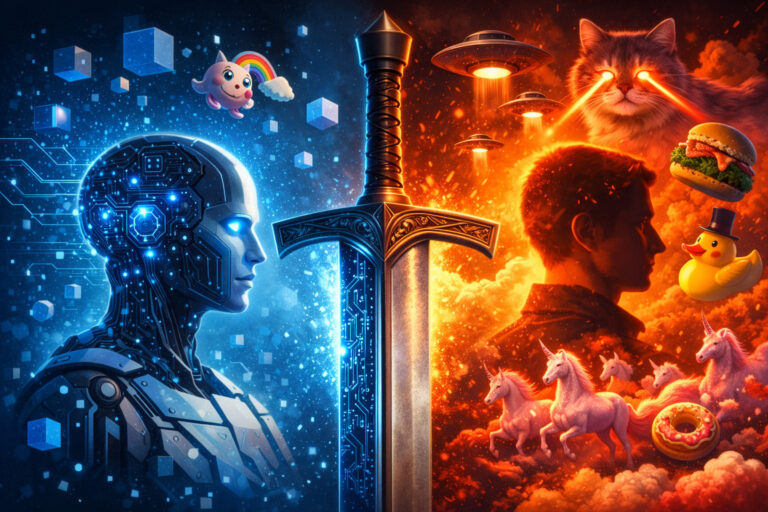
Balancing automation, integrity, and trust in manufacturing & industrial brands
By Marie Limnios, President, Redhype Creative Marketing Agency
AI is no longer knocking on the door of manufacturing and industrial development. It’s already inside the building.
What we’ve seen working alongside manufacturers and industrial developers is that artificial intelligence is fundamentally changing how facilities run, how projects are planned, and how long-term decisions are made. It’s delivering speed, efficiency, and foresight that simply didn’t exist a decade ago.
But here’s the part that often gets overlooked. Technology doesn’t operate in a vacuum. How these industries adopt AI, explain it, and humanize it will matter just as much as the systems themselves.
That’s where my role comes in as a marketer.
What We’re Seeing on the Factory Floor
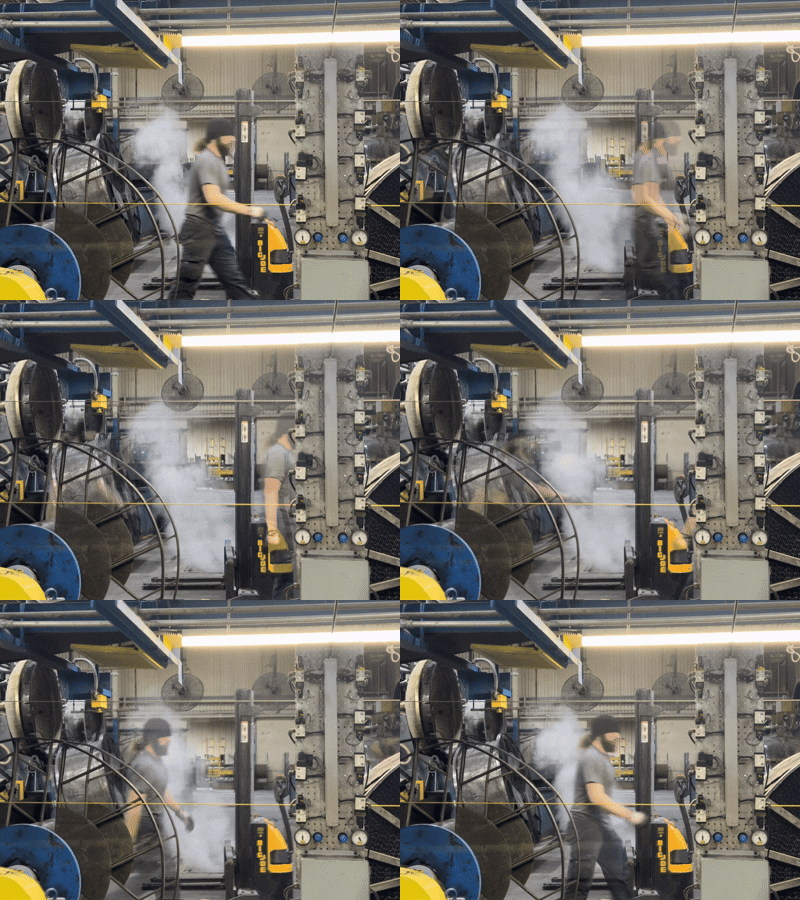
Inside manufacturing environments, AI is doing exactly what it was designed to do. Predictive maintenance has become one of the clearest wins. Equipment issues are identified before they shut down production. Emergency repairs drop. Safety improves. Output becomes more consistent.
Automation and robotics are also stepping in to handle repetitive or dangerous tasks, reducing risk and increasing precision. AI can even adjust production schedules when supply chains shift or materials are delayed upstream.
But adoption isn’t seamless. Many facilities are still running on legacy equipment that wasn’t built to integrate with modern AI systems. And when teams lean too heavily on automation without training or oversight, troubleshooting becomes harder, not easier.
AI doesn’t replace institutional knowledge. It depends on it.
Where Strategy, Story, and Trust Intersect
Operational improvements are only one side of the equation.
Manufacturers and industrial developers today are expected to communicate how AI fits into safety, workforce planning, compliance, sustainability, and long-term growth. Investors want clarity. Municipal partners want reassurance. Employees want transparency. Communities want trust.
This is where brand, messaging, and storytelling matter more than ever.
Your website is no longer just a brochure. It’s a credibility check.
Your videos are not just visuals. They’re proof of leadership, process, and pride.
Your content is not marketing noise. It’s how complex systems become understandable, and how innovation becomes trustworthy.
AI can assist in organizing data, identifying patterns, and supporting content creation. But it cannot decide what matters. It cannot replace judgment. And it cannot tell your story with integrity.
Humans do that.
The Cost Conversation No One Loves
AI is rarely a one-time investment. Pilot programs may start around $25,000, but fully scaled systems can quickly reach six or seven figures. Integration with older infrastructure, ongoing model updates, data security, compliance, and training all add up.
There’s also a growing legal and IP layer many companies underestimate. Some AI platforms retain rights to generated outputs. For manufacturers and developers using AI-assisted documentation, reporting, or technical content, ownership matters. A lot.
The companies seeing the strongest results are the ones treating AI as a long-term strategy, not a quick upgrade.
Data Is the Real Backbone
AI is only as effective as the data behind it. Nearly half of AI implementation time is spent cleaning, organizing, and preparing data. Inconsistent or incomplete data slows systems down and inflates costs fast.
From a strategic standpoint, strong data practices don’t just improve operations. They make AI easier to explain, easier to scale, and easier to trust. Clean inputs lead to clearer outputs, which leads to better decision-making across leadership teams.
Ethics, Oversight, and Accountability
As AI becomes more involved in operational decisions, accountability becomes unavoidable. Regulations are still evolving, especially across borders. Transparency, privacy, and fairness are no longer optional. They’re expected.
If an AI system makes a poor or unsafe decision, someone has to own that outcome. Increasingly, companies are being evaluated not just on what technology they use, but how responsibly they use it and how clearly they communicate those choices.
Where AI Stops and Story Begins
This is where I’ll speak plainly from my seat as a marketer embedded in these industries.
AI can optimize operations. It can surface insights. It can support efficiency at scale. But it cannot build trust. It cannot replace relationships. And it cannot create the human moments that ultimately drive confidence in your company.
That’s where our work at RCMA lives.
Manufacturing and industrial development brands are built on clarity, credibility, and consistency. The brand system that signals stability before a meeting ever happens. The website that explains complex processes in a way real people understand. The video that shows leadership, craftsmanship, and accountability, not just machinery.
We use AI the way it should be used. As an assistant, not the voice. As a tool, not the storyteller.
The strongest brands are still human. They answer real questions. They show real people. They reflect real values. And they are built by partners who take the time to understand not just what a company does, but why it does it.
AI may help you move faster.
But relationships are what move you forward.
Cheers!